

Introduction
During the 2019 season, Formula 1 revealed the significant environmental impact of the competition, with total CO2 emissions amounting to 256,000 tonnes. This revelation came before any sustainability efforts and strategic considerations were in place. The Net Zero 2030 initiative aims to make Formula 1 carbon-neutral, reducing emissions to “Net Zero.”
As the new era of the F1 hybrid power unit approaches, Formula 1 has recently published its latest report on sustainability and its commitment to achieving Net Zero carbon emissions by 2030. This blog explores the implemented measures, key achievements so far, and the next steps.
Disclaimer
The article discusses Formula 1 teams’ contributions to the current 2024 calendar grid. The teams have different policies and adaptations regarding the F1 Net-Zero Carbon 2030 initiative. Hence, this article only highlights publicly available information and does not comment on whether one team is contributing to the initiative compared to another in terms of sustainability. The article specifically discusses the teams’ sustainability actions for the F1 Net-Zero 2030 initiative and not their overall sustainability plans.
Formula 1 Impact Report 2023 – Net Zero Simplified
Sustainable Fuel
In 2022, the Formula 1 carbon footprint report indicated that the total emissions from all Formula 1 cars across the season were less than 1% of the total Formula 1 carbon emissions, from the factory to the chequered flag (p.13).
Starting with the 2026 season, all teams will be regulated to use 100% advanced sustainable fuel to power their cars (p.15).
The intuitive questions that you would ask are “What is sustainable fuel” and “How is it possible to obtain such fuel?”.
A 100% advanced sustainable fuel is labelled as such because it will not add extra CO2 to the atmosphere. In other words, it will be carbon neutral, meaning the amount of carbon extracted from outer sources to manufacture this fuel will be the same as the amount of carbon emitted by the engine (e.g., carbon out = carbon in).
How is this possible?
The manufacturing process starts with extracting carbon from the air. The carbon is then liquified through complex chemical reactions to produce synthetic fuel.
Renewable Energy and Logistics
When considering the full spectrum of Formula 1 operations, it is essential to recognise that the competition involvements extend beyond the practice sessions, qualifying, and races seen on TV. Key aspects include:
- Manufacturing of car parts: such as the chassis, engine, and more.
- Logistics: transportation of cars, equipment, team staff (engineers, mechanics), and media personnel worldwide for all the Grand Prix events throughout the season.
- Facilities and energy management: energy used to power the Grand Prix circuits, paddocks, media areas, and data analysis equipment for each team and events operations.
It is inevitable that energy usage must migrate to 100% renewable energy resources. In this regard, Formula 1 has increased its reliance on renewable energy from 50% to 75% for entire Grand Prix weekends between the 2022 and 2023 seasons.
During the 2023 season, the Austrian Grand Prix management reduced its emissions by 90% compared to the previous 2022 season in the paddock and operations compound area. The Bahrain Grand Prix circuit generated 5.28 MW of clean energy through its solar panels, sufficient to meet the entire circuit’s energy needs with surplus energy. Additionally, the British Grand Prix utilised 2,746 solar panels and Hydrotreated Vegetable Oil (HVO) fuel in all temporary generators.
Finally, Formula 1 transitioned a part of its operations to remote setups to reduce logistics-related carbon emissions.This includes launching biofuel-powered trucks in partnership with DHL, the official Formula 1 logistics partner, resulting in an average emissions reduction of 83% during the European season.

Formula 1 teams’ Net Zero Implementations
Mercedes
Mercedes AMG F1 team started tracking and analysing their available carbon footprint data from 2018 onwards. The core principle of the team’s 2024 Sustainability Report is to go above and beyond to optimise for a high-performance full operation as a motor-racing team, with the aim of becoming one of the most sustainable global professional sports teams – as per Toto Wolf, Team Principal & CEO.
The team divided their sustainability plans into 3 categories: Environmental, social, and Governance under the name ESG Structure.
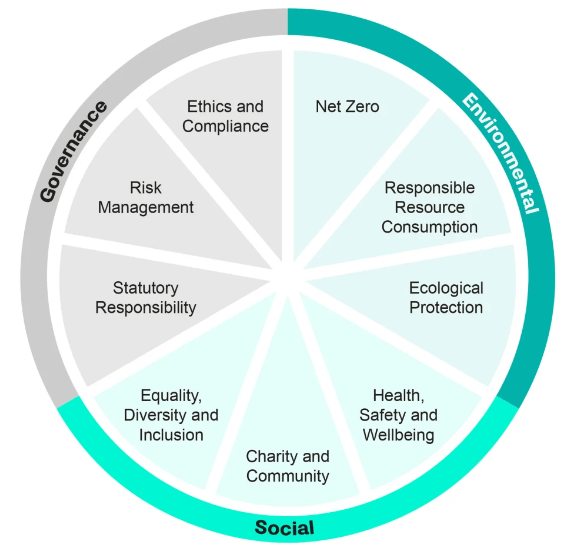
Additionally, the team unveiled their £70 million investment in redevelopment of their Brackley site in the UK to create a sustainable F1 campus for the future. The campus will be powered by 100% renewable energy both onsite and offsite sources, including a new onsite solar array car park.

In their 2024 annual Sustainability Report, the team stated a reduction in 2023 air freight CO2 emissions of 6,695 tonnes using SAFc* compared to 2,628 tonnes during 2022, in addition to a 67% cut in the logistics emissions during the European F1 calendar year by using HVO100 biofuel, which saved 339 tonnes.
The Net Zero key achievements are summarised within the environmental change, which is targeting the team’s commitment to reach the Net Zero 2030 target by achieving a 100% reduction in Scope 1 and 2 emissions* and a 75% reduction and 25% removal for Scope 3* emissions within race team control. With the end goal of having a Full Net Zero across all Scopes by 2040. This step comes hand in hand with the “responsible resource consumption” plan to operate all the new buildings with 100% renewable energy from onsite and offsite sources, with a target timing between 2026 and 2030.
The full Mercedes 2024 Sustainability Report and Data Infographics is Here.
McLaren
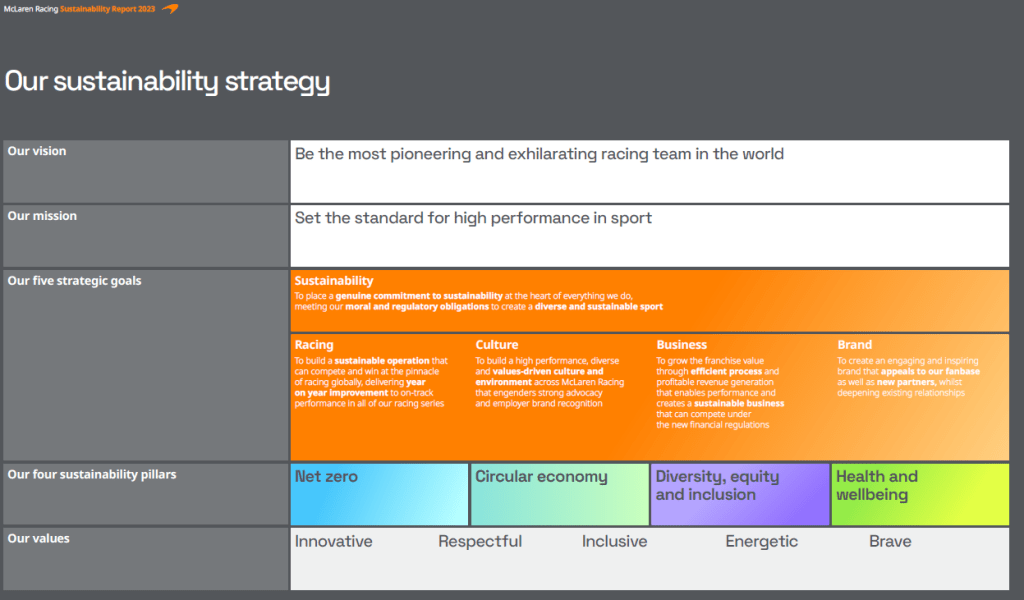
McLaren Racing holds the second-longest streak of competing in Formula 1 history. The team has declared their commitment to sustainability through their four pillars of sustainability strategy: Net Zero, Circular Economy, Diversity, Equity and Inclusion, and Health and Well-being.
The team revealed a 22% reduction in greenhouse gas emissions against their 2019 baseline , including a 9% decrease in air freight emissions. McLaren Racing has set ambitious targets, aiming to switch to 100% renewable electricity by 2030 and achieve zero greenhouse gas (GHG) emissions across all operations by 2040. In their 2023 Sustainability Report, the team detailed key emission reduction projects during the 2023 Formula 1 season, including the F1 air-to-sea freight initiative and the use of trackside HVO biofuel generators.
F1 Air-to-Sea Freight: In 2023, McLaren Racing shifted 934kg of logisitcs from air freight to sea freight, saving 134 tonnes of CO2e. To further reduce air freight emissions, the team highlighted the necessity of race calendar modifications, noting that tight scheduling between events can increase air freight intensity.
Trackside HVO Biofuel Generators: During the 2023 Austrian Grand Prix, McLaren Racing introduced an energy generation compound using HVO biofuel generators and solar electricity. This initiative successfully reduced the GHG emissions of the event, with other teams also benefiting from these generators. Beyond race events, McLaren Racing plans to use HVO fuel for logistics trucks during the European F1 race events starting in 2024.
Zak Brown, McLaren Racing CEO, emphasized the importance of sustainability, stating, “Sustainability needs to be the heart of everything we do. Now more than ever.”
For more details, the full McLaren Racing Sustainability Report 2023 can be found Here.
Aston Martin
Aston Martin F1 Team emphasised their commitment to sustainability and the Net Zero 2030 goal through significant shifts in the motorsport realm. The AMF1 team exemplifies this commitment by attaining key FIA and ISO standards for sustainability leadership. The accreditations that AMF1 has earned so far include:
- FIA Three-Star Environmental Accreditation Programme
- ISO 14001 Environmental Management
- ISO 50001 Energy Management
- ISO 20121 Sustainable Events Management
- ISO 45001 Occupational Health and Safety
- Carbon Footprint Verification
Mike Krack, AMF1 Team Principal, stated, “We acknowledge that we are still at the start of our journey – there is still so much more that we can achieve as we continue to focus on implementing sustainable systems across the team and raise further environmental awareness.”
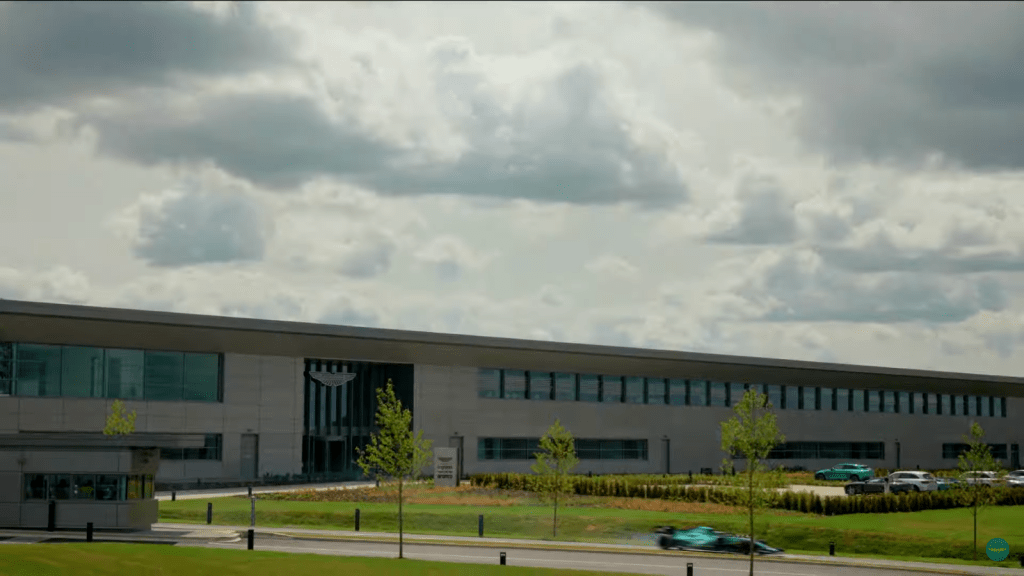
The Aston Martin Technology Campus, which officially opened before the 2023 British Grand Prix at Silverstone, operates entirely on renewable energy. Powered by solar panels, the new campus can eliminate 278 tonnes of CO2 emissions annually compared to the previous factory.
AMF1’s team BSI Centre of Excellence for Sustainability focuses on eliminating the three emissions scopes*, primarily resulting from logistics operations beyond the race cars. Efforts to reduce, recycle, or repurpose materials are being prioritized, such as eliminating single-use plastics and donating surplus food.
The BSI aims to extend these practices for the general benefit of the sports and events industries, including initiatives such as an all-staff electric car scheme.
Lawrence Stroll, Executive Chairman of the AMF1 Team, remarked, “Our new AMR Technology Campus is being built around our people. It will make designing, constructing and operating race-winning Formula 1 cars better, and it is also the most sustainable campus the sport has ever seen.”
Red Bull
Red Bull Racing has joined forces with the other Formula 1 teams to achieve the three-star rating in the FIA Environmental Accreditation Programme. Furthermore, the team received certification from the British Standards Institute for their ISO14001 Environment Management System.
The team has addressed key aspects of their sustainability, significantly reducing carbon emissions, minimising waste, and enhancing efficiency. In their pursuit of Net Zero by 2030, they have partnered with a renewable energy supplier to adopt smart building technologies, eliminate landfill waste from manufacturing, promote sustainable travel, and reduce single-use plastics. These initiatives have resulted in reducing over 70% of their Scope 1 and 2 emissions and over 30% of their measured Scope 3 emissions.
HAAS
During the 2023 Formula 1 season, the HAAS F1 team launched an extensive sustainability task force to establish an environmental and sustainable baseline up to the highest standards.
Expanding on their achievement of the Three-Star Environmental Accreditation Program from the FIA, the HAAS F1 team announced that their Banbury site in Oxfordshire, UK,is powered by 100% renewable energy, with 80% of lights replaced with LEDs. The team adheres to multiple sustainable standards, such as the Energy Saving Opportunity Scheme (ESOS) and Streamlined Energy and Carbon Reporting (SECR). Additionally, they are optimising their logistics operations by minimising unnecessary travel outside the racing calendar and streamlining the overall equipment transportation weight, thus reducing carbon emissions from air freight.
“I’m very proud of the team for achieving FIA Three-Star Environmental Accreditation, putting in a lot of extra work during the busiest season of Formula 1 to-date, to ensure we meet this important target,” said Guenther Steiner, Team Principal of the Haas F1 Team during the 2023 Formula 1 season.
Alpine
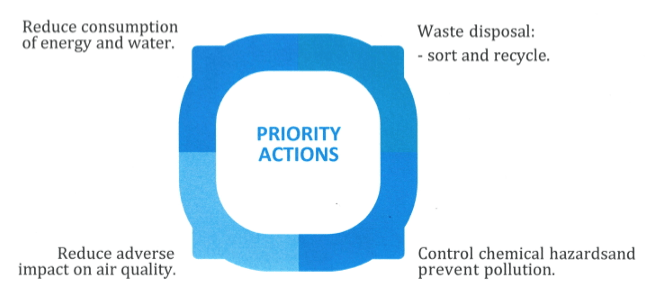
In a public statement, the Alpine F1 team highlighted their key achievements, including obtaining the FIA Three-Star Environmental Accreditation and ISO 14001 Environmental Management certification for both the Enstone and Viry Châtillon sites. The team launched an initiative to create plastic-bottle-free zones at the races trackside and its Enstone factory. They have also relied on renewable energy sources for Enstone’s factory operations since 2024.
The team summarised their sustainability policy in the following chart:
Otmar Szafnauer, Team Principal of the BWT Alpine F1 Team, stated, “We are pleased to announce our FIA Three-Star Environmental Accreditation. It is a great step forward in our environmental roadmap. We are now working towards securing ISO 14001 accreditation for Enstone, which sits within the framework of Alpine’s Sustainability Strategy. Our decarbonisation journey is well underway, and we look forward to sharing more positive milestones in the near future.”
Williams
Williams Racing has been on the Formula 1 grid since 1977, making it the team with the third-longest continuous presence in Formula 1 history under one name. The team announced their sustainability strategy in 2021, focusing on the following five concepts: Climate Action, Biodiversity Stewardship, Sustainable Innovation, Industry Access for All and Purpose-Driven Leadership, achieving climate positivity by 2030.
The sustainability strategy is built in compliance with the United Nations Sustainable Development Goals (SDGs). It contributes to 12 of the 17 SDGs as well as the United Nations’ UNFCCC Sport for Climate Action Framework.
The climate action objectives primarily focus on significantly eliminating GHG emissions stemming from air freight and race team operations and logistics. The team has transitioned to generating their onsite energy from 100% carbon-free renewable sources, with their headquarters boasting an energy production capacity of up to 2 GWh per year.

Sustainable Innovation plays a vital role in William Racing’s plan for full life-cycle management of their racing cars. This involves implementing circular economy strategies and engaging in carbon capture projects. By the end of 2024, the team is expected to conduct a full Life Cycle Assessment of their racing car with the objective of reducing CO2 footprint. This initiative is part of a broader plan that includes publishing two additional innovative projects, showcasing their circular economy principles for a sustainable Formula 1 race car design, headquarters, and trackside hospitality.

Jost Capito, CEOof Williams Racing, stated: “Building on the progress the global motorsport industry has made on sustainability in recent years, we have taken time to thoroughly analyse our entire operation and develop a comprehensive purpose-driven, Sustainability Strategy to accelerate our sustainable transformation. As a team, we wanted to push the envelope and be the pacesetter for sustainability in global motorsport and in the wider automotive industry. So today we are making the commitment to be climate positive by 2030 and we will be using our knowledge to nurture and develop advanced technology to meet this goal”.
For the full Williams Racing sustainability strategy, click Here.
RB
The RB Formula 1 team (previously known as Alpha Tauri) shared extensive figures on their website regarding their countdown to net zero by 2030, aligning their goals with the FIA and Formula 1’s vision for a sustainable motorsport environment.
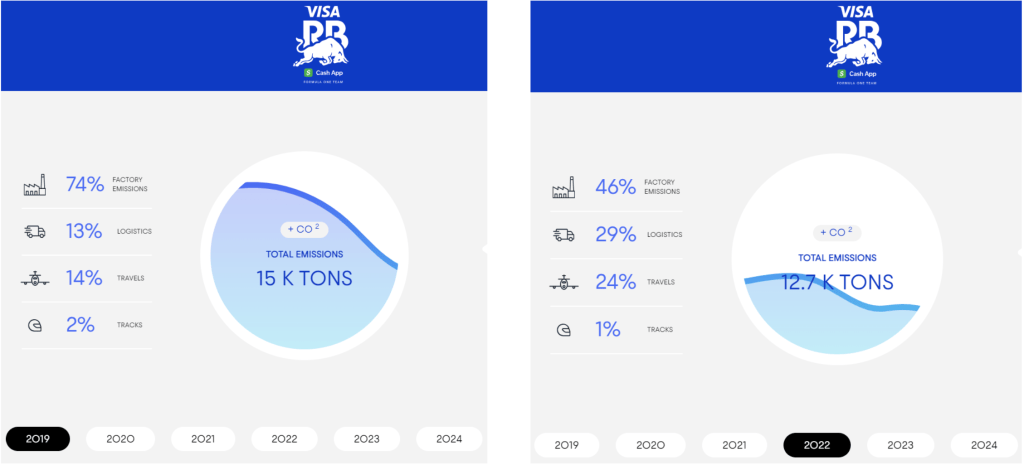
Between the 2019 and 2022 Formula 1 seasons, RB achieved a 28% reduction in their total factory emissions across their two sites in Faenza, Italy and Bicester, UK. The team began operating their factories on green electrical energy, sourced entirely from renewable sources in 2020. They also implemented a complete ban on plastic materials, prohibiting the use of single-use plastic items such as water bottles. Although logistics and air freight emissions increased by 16% and 10% respectively, the overall emissions decreased from 15,000 tonnes to 12,700 tonnes per year.
In 2022, The RB Formula 1 team opened the Enomondo thermo-electric power plant, running on biomass, at their Faenza site in Italy. In April 2024, the team announced the installation of an additional 1,010 solar panels with an electrical power output of 580 kWp. The electrical energy generated by these solar panels is primarily used in the Formula 1 car departments, with any excess energy fed back into the external grid. The team has also been awarded the FIA Three Star Environmental Accreditation and obtained the certification of Environmental Management System CQY.
Starting from the 2025 season, the team plans to implement gradual reductions in CO2 emissions, with specific plans yet to be announced.
For more details, RB’s Sustainability Infographics can be found Here.
Stefano Domenicali, President & CEO of Formula 1, stated, “Sustainability is one of the most important factors to us not only as a sport, but as a business. It is no longer enough for us to simply deliver great action and wheel-to-wheel racing on the track; we need to ensure that we are doing so in a sustainable way so our sport can thrive long into the future.”
Ferrari and Sauber are yet to publicly reveal their plans for the Formula 1 Net Zero 2030 initiative.
Definitions
Scope 1 emissions: Direct greenhouse (GHG) emissions that occur from sources controlled or owned by an organisation (e.g., emissions associated with fuel combustion in boilers, furnaces, vehicles). – Source: U.S. Environmental Protection Agency.
Scope 2 emissions: Indirect GHG emissions associated with the purchase of electricity, steam, heat, or cooling. Although scope 2 emissions physically occur at the facility where they are generated, they are accounted for in an organisation’s GHG inventory because they are a result of the organisation’s energy use. – Source: U.S. Environmental Protection Agency.
Scope 3 emissions: The result of activities from assets not owned or controlled by the reporting organisation but that the organisation indirectly affects in its value chain. An organisation’s value chain consists of both its upstream and downstream activities. – Source: U.S. Environmental Protection Agency.
SAFc: Sustainable Aviation Fuel, or drop-in jet fuels made from waste and renewable feedstocks.
kWp: Kilowatt Peak
Inspired by Ali’s insights? If you want to pursue a career as an Aerodynamicist, master Bramble CFD and Catia 3DX, our Aerodynamics Career Accelerator Program may be for you. Sign up down below for the next course today!

Check out Aerodynamics Career Accelerator Program!
Meet the Author

Ali Abdelrahim holds an MSc in Electric Vehicle Engineering from the Motor Vehicle University of Emilia-Romagna MUNER – Alma Mater Studiorum – Università di Bologna in Italy, and a BEng degree in Mechatronics Engineering from The University of Manchester in the UK. Ali has international expertise within the Automotive & Motorsport sectors, having worked in Italy and Spain with a few of the biggest OEMs and suppliers in the world. Ali is passionate about high-performance and racing cars. Outside work, he enjoys playing football and go-kart, reading and learning new languages.
